
The Liturgical Calendar
As Presbyterians, [PC(USA)], our worship follows the Liturgical Calendar throughout the year. The Liturgical Calendar is structured around the life of our Lord Jesus Christ, his birth, life, death, and resurrection, the Redemption of mankind. Thus, we observe the seasons of Advent, Christmas, Epiphany, Lent, Holy Week, Easter, and Pentecost. This means our worship follows the history of Jesus Christ and the events that make up the history of salvation.
The Liturgical calendar is based on early Jewish traditions of feasts and started by the early Christians of the 4th century. Originally it focused on Easter; Christmas was included about 335 AD, and it was fully defined by the Age of Faith (Medieval Times). Major changes were made to the Liturgical Calendar in 1969.
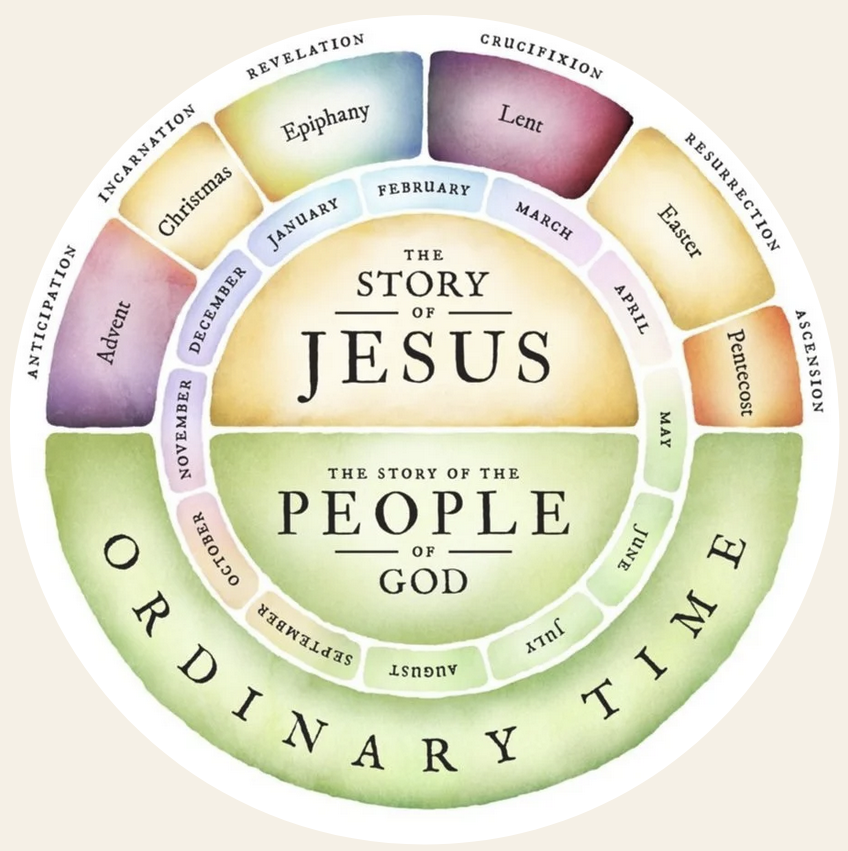
*Liturgical Calendar courtesy of Third Church. Used with permission.
More about the Liturgical Calendar
First half of the calendar
In the early days of the church, Christians developed a calendar that reminded them of the story of Jesus’s birth, life, death, and resurrection. Today it reminds us each year of the redemptive love God has for us through the re-telling of the gospel story.
The Liturgical Calendar divides the year into two halves. The first Sunday of Advent in late November starts the calendar. The first half ends with the Sunday of Pentecost, usually in May or June. The retelling of the story of the life of Jesus Christ includes words, music, art, the Scriptures, prayers, and colors.
Advent is the anticipation of the coming of Christ. For Isreal, all those years ago, it was their hope and longing for the promised Messiah. Today we remember that but we are also hoping and longing for the return of Jesus Christ, the Second Coming. Advent is celebrated for four Sundays starting in late November and is associated with the color Purple for royalty (Christ coming) for the 1st (Hope), 2nd(Peace), and 4th (Love) Sundays. The 3rd Sunday is pink for Joy – it marks that Christmas is near. Blue is sometimes used in place of Purple. White is used Christmas Eve/Day to symbolize purity, light, and the arrival of Christ.
Christmas is a time of remembering the awesome gift from God, that Jesus, Immortal though He was, became mortal like us and came to live among us. There are 12 days of Christmas whose color is white.
Epiphany is the celebration of the revelation of Christ and includes the Magi’s visit to honor Jesus, the baptism of Jesus, and Jesus’ transfiguration on the mountain top. It is a time to reflect on Jesus’ life on earth, and his mission to redeem the world and bring the Kingdom of God amidst us. There are 7, or sometimes 8, Sundays during the Epiphany season and the color for all is White with many accent colors.
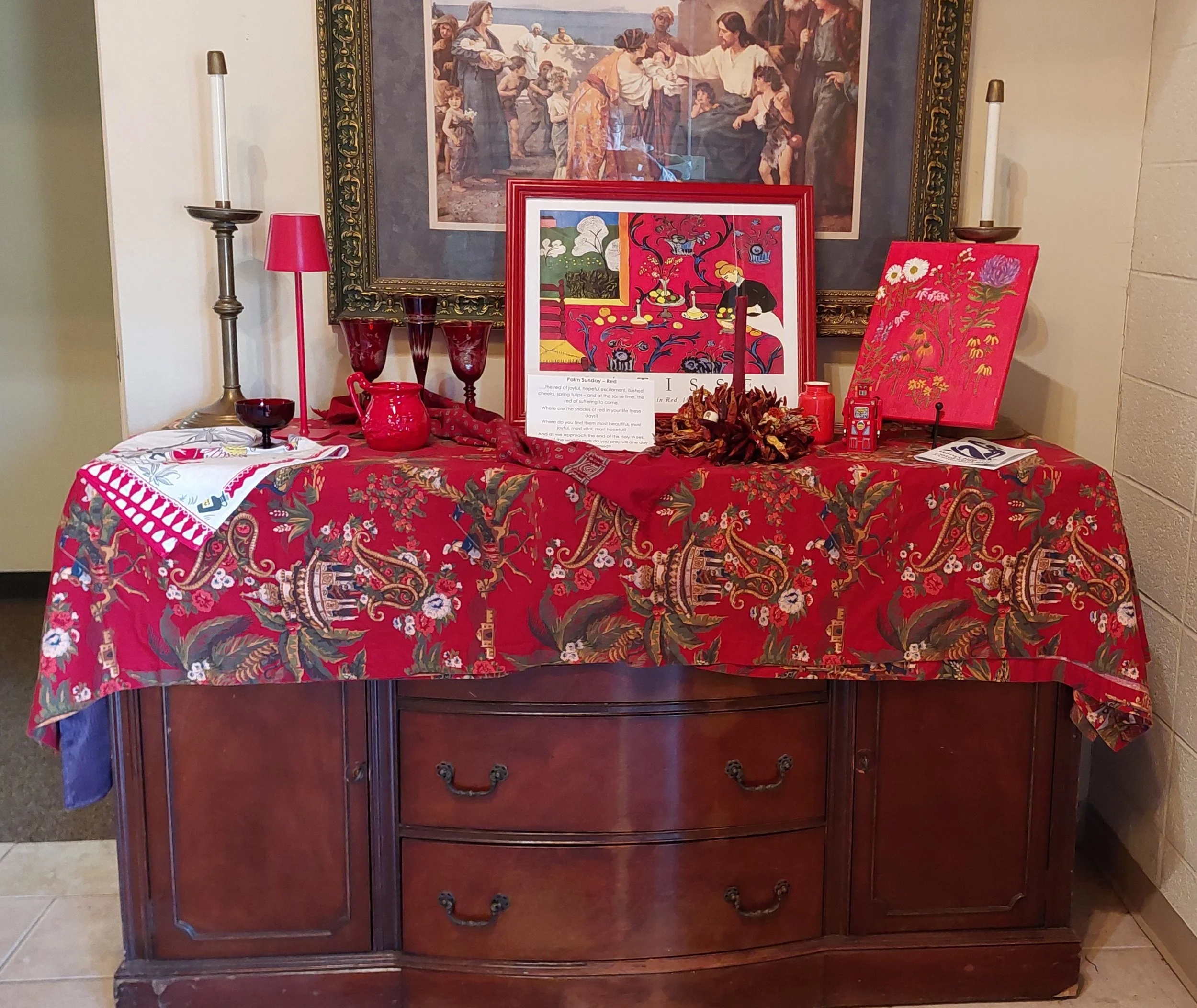
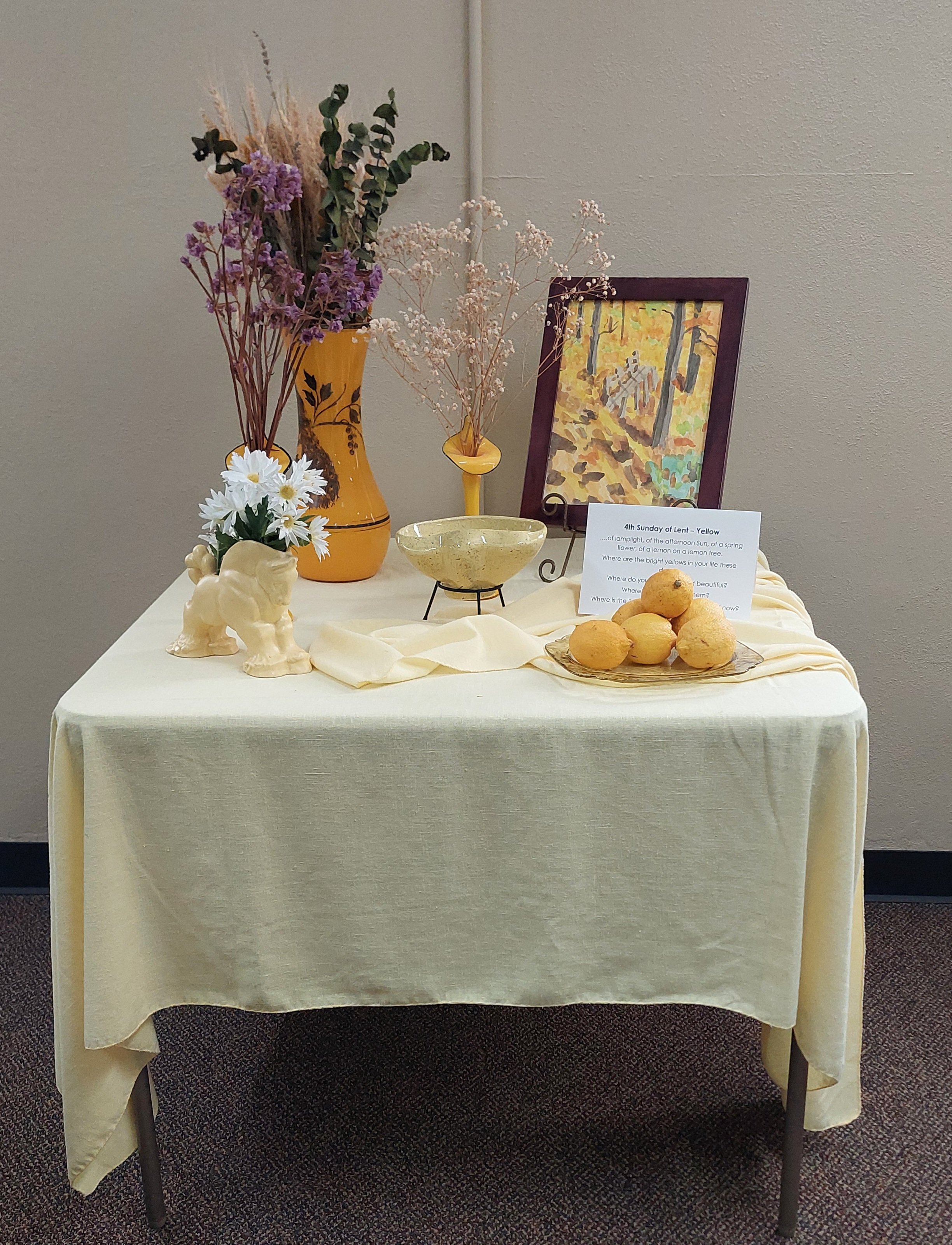
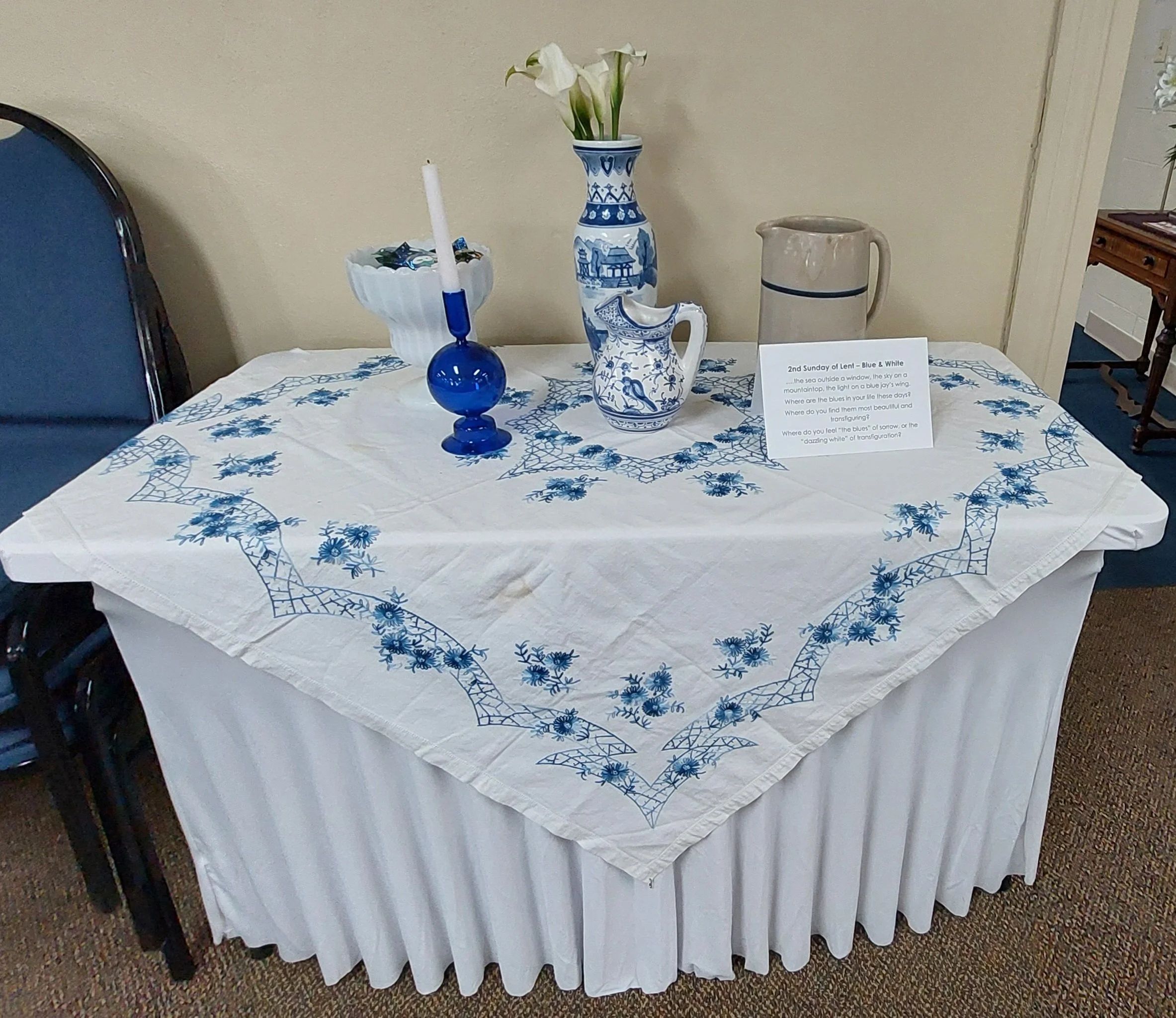
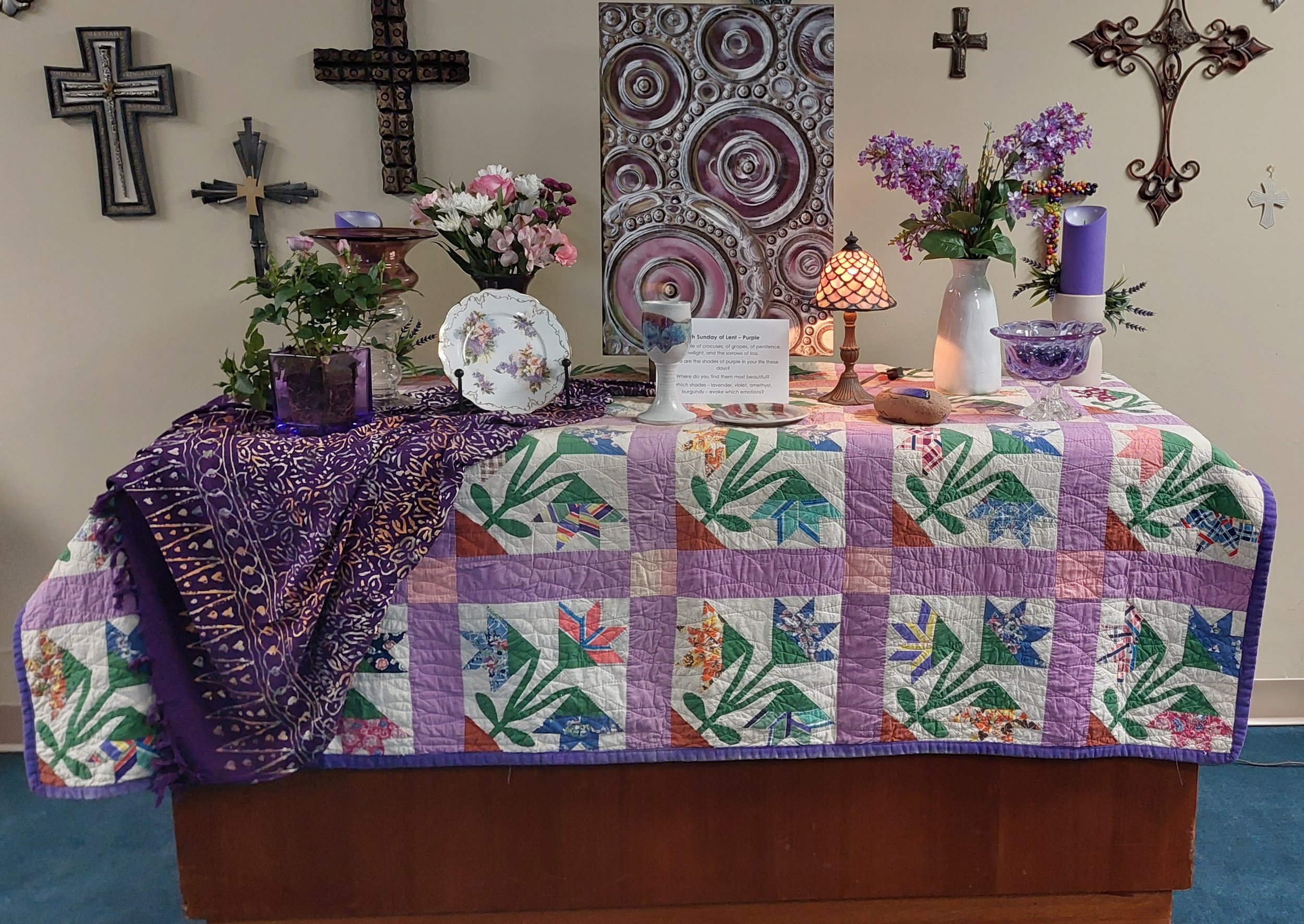
Lent remembers the crucifixion of our Lord Jesus and his suffering and atoning death for us; it reminds us of our need for repentance. Lent begins on Ash Wednesday and continues for 6 Sundays or 40 days. The common colors of Lent are Purple, Brown, and Black although some churches have adopted Henri Matisse’s “Colors of Lent”.
Ash Wednesday – Gray like ashes
1st Sunday – Bright Green like spring
2nd Sunday – Blue and White like the sky
3rd Sunday – Black like the night sky
4th Sunday – Yellow like the sun
5th Sunday – Purple like the color of grapes
6th Sunday – Palm Sunday – Red like flushed cheeks
Easter remembers the resurrection, Jesus rising from the tomb and his triumph over death, sin, and hell! There are 6 Sundays in this season or 50 days. The colors are white and gold.
Pentecost focuses on Christ’s ascension into heaven and the gift of the Holy Spirit poured out on the disciples. There are 2 Sundays in Pentecost with both using the colors Red and Orange
The second half of the calendar
The second half of the Liturgical Calendar covers about 24 Sundays from late May or early June through Christ the King Sunday in late November. This period of time is called “Ordinary Time” and focuses on the Old and New Testament stories of Gods people. The color of this season is green.
Using the Liturgical Calendar helps us to focus on the life, death, and resurrection of our Lord and can be a strong tool of discipleship for us.